
A Picture Book Journey
Spore hosts

Save the Date
What do images Remember? Argentina: 50 Years after the Military coup
A dialogue about archives and memories – film screening, reading, performance and discussion
6. March 2026
17.30-19.30
17.30-19.30
Save the Date
For free
For adults and teenagers older than 14
in German/in Spanish
This evening critically considers memories and memory-formation from and since the military dictatorship in Argentina. We welcome Berlin’s Spanish-speaking community and anyone interested in the intersection of art, archival practices, and the culture of memory. The evening may also be especially interesting for anyone engaged with themes such as migration, exile, and the role of images in shaping memory and promoting justice in Latin America.
Schedule
Introduction by Ezequiel Monteros, 5–10 min.
Screening of UNFORGETTABLE by Fernanda Ortiz, 60 min.
UNFORGETTABLE transforms movement traces into a scenic archive of personal and political migration experiences. The film demonstrates how memories shift and reshape themselves across national borders.
Artist talk with Fernanda Ortiz, approx. 20 min.
Break, 15 min.
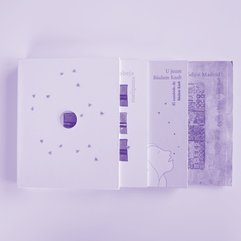
Showcase of Archivo Hasenberg-Quartett with a reading by Malen Zapata, approx. 10 min.
Visual documentation of resistance and collective struggles through photographs by Argentinian reporters.
Screening of Was erinnern Bilder? a video work by Ezequiel Monteros, approx. 20 min.
This work is an audiovisual investigation into images of collective memory.
Reading: Mariana Eva Perez, Ligia Liberatori, Maria Esther Alonso, Malen Zapata, approx. 10 min.
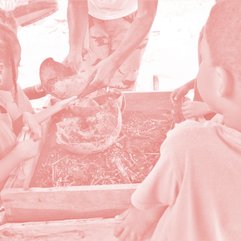
„Grabando Memoria“ participative open linocut workshop
To explore collective memory. Participants are free to work on plates and make prints on paper or fabric. Based on working with linoleum, the activity invites participants to reflect on memory as a collective, active process.
Moderated discussion and Q&A with the artists
In the spirit of Spore, we view cultural activation as an act of social justice. In a Berlin shaped by migration, working on collective memory is essential to overcoming the invisibility of biographies marked by migration. Throughout this evening, we'd like to propose the archive as a dynamic space, and address migration as a transformative process. Together, we will explore how the reconstruction of memory through the image can contribute to a more just and inclusive culture of remembrance.
Text written by the organizer