
A Picture Book Journey
Spore hosts

Save the Date
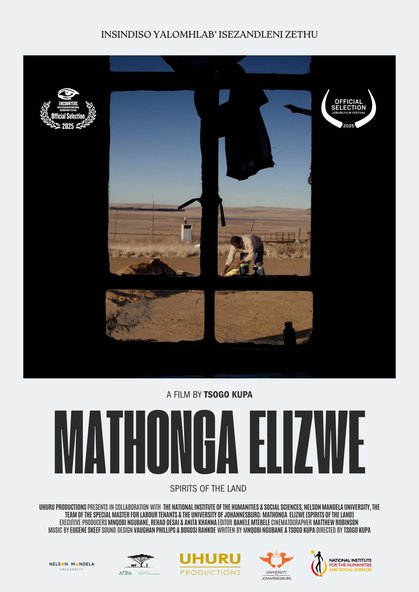
Mathonga Elizwe - Spirits of the Land
Film screening and panel discussion with Q&A
8. May 2026
18.00-19.30
18.00-19.30
Save the Date
For free
For adults
in English
Mathonga Elizwe – Spirits of the Land
Tsogo Kupa, 2024, 40 Min., Documentary
In English and isiZulu
The continuities of apartheid and colonialism are an often overlooked or underestimated reality in South Africa, and are experienced daily. In particular, land distribution policies continue to reinforce structural inequalities and injustices, and perpetuate violence against those with ancestral claims to their land.
The Film Mathonga Elizwe – Spirits of the Land encapsulates these ongoing injustices. It tells the stories of three claimants from different parts of the country and portrays the brutal struggles of land tenants as they face delays, threats, humiliations and assaults at the hands of legal owners and state bureaucracy. These systematic barriers prevent a fair redistribution in the post-apartheid era. Through sensitive narration, we witness the strength with which land tenants continue to fight for their ancestral land.
In order for them to gain more global visibility, it is essential to open critical discussions around these ongoing land struggles. Such conversations are particularly relevant in the German context, where the country's colonial history remains an unspoken truth. From 1843 onwards, Germans settled in the KwaZulu-Natal region to farm cotton and pursue missionary activities, the latter of which often depended on farming for financial support. Online forums about the history of German churches in Natal imply that the region's history began with German missionaries, suggesting that there was no history or people belonging to this space before the settlement, and that it did not affect anyone. However, the film shows that this is not true. Because of our interwoven histories and the responsibility we have to examine the history of colonial activities more closely, and to consider its lasting effects, adressing these issues in Germany becomes crucial. What's more, Germany continues to support and legitimise land-grabbing practices in other parts of the world, such as Palestine. The film provides a meaningful and timely entry point into these much-needed conversations from a lesser-known perspective.
The screening will be followed by a panel discussion and Q&A with Dr. Mnqobi Ngubane, a scholar and activist from the University of Witwatersrand in Johannesburg; filmmaker Tsogo Kupa; and Dr. Dineo Skosana, a researcher from the same institution.

Miranda Hochman, Sara Pyakurel and Madalena Kresimon are students and activists from Argentina, Nepal, and Germany, respectively. While studying together in South Africa, they discovered the film and began collaborating with the filmmakers to organize screenings and fundraisers in Germany.