
A Picture Book Journey
Spore hosts

Save the Date
Zeit zu reden: Israel’s Palestinian Citizens
The Struggle for Political, Legal and Social Justice
30. September 2026
19.00-22.00
19.00-22.00
Save the Date
For free
For adults
in English
Twenty percent of Israel's population—around two million people—are Palestinian citizens of Israel. Their story begins with the Nakba, the catastrophe of 1948: while roughly 750,000 Palestinians were expelled from or fled their homes, about 150,000 remained within the newly established State of Israel and were granted citizenship under the 1952 Nationality Law. Until 1966, they lived under repressive military rule, but structural inequality persisted long after it was lifted.
To reinforce and preserve the Jewish character of the state, Israel has passed laws that discriminate against the Palestinian population, directly or indirectly—in access to housing, education, and employment, in health care, and in the choice of a spouse. The 2018 Nation-State Law grants the right to national self-determination only to the Jewish people, without guaranteeing the equality of all citizens before the law.
While the state expands and promotes exclusively Jewish residential areas, Palestinian communities are deliberately neglected. The result is poverty, crumbling infrastructure, poorer educational opportunities, and a lack of prospects, conditions that have contributed to a rise in organized crime and violence within these communities. Families in overcrowded urban neighborhoods are affected just as much as Bedouin communities in the Negev, whose villages remain officially unrecognized to this day and are now being demolished to make way for Jewish towns.
Politically, Palestinian citizens remain marginalized despite having their own parties. Since October 7, 2023, the pressure has intensified further. Adalah, the Legal Center for Arab Minority Rights in Israel, has documented at least 645 arrests for speech-related offenses under the Counter-Terrorism Law between October 2023 and April 2025, the overwhelming majority of those arrested Palestinians. At the same time, civil society and legal resistance are growing: NGOs are challenging discriminatory laws in court, while a new generation of historians is re-examining the history of 1948 and its consequences.
The panel discusses historical continuities from the Nakba to the present, social and spatial realities, and legal strategies. How can Palestinians use Israeli citizenship to protect their existence? Under what conditions does Jewish-Palestinian cooperation in politics and civil society work? And what role does the international community play?
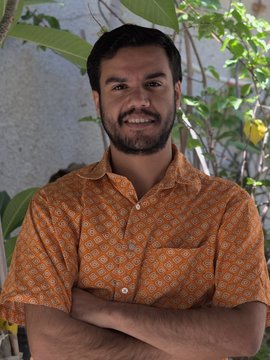
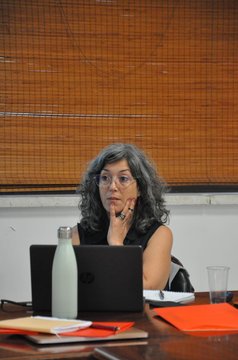
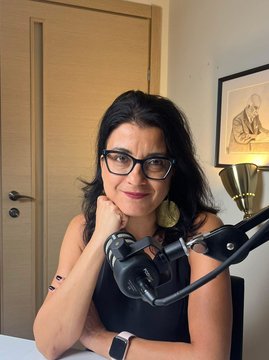
Panelists: Sleman Altehe, Himmat Zoubi and Sawsan Zaher
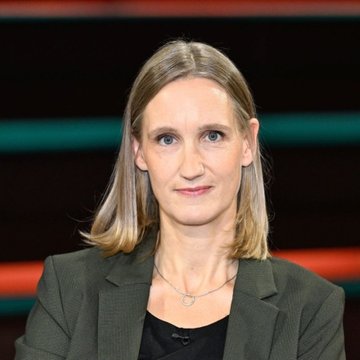
Moderator: Kristin Helberg