


Kitchen Talks: Allegory of a Broken Body: Andean Rites and Ceremonies / Alegoría de un cuerpo roto: Ritos y ceremonias andinas
Lecture performance and collective bread-making with Indigenous artist Tiziano Cruz / Conferencia-performance y elaboración colectiva de pan con el artista indígena Tiziano Cruz
17.00-20.00
Save the Date

All ages welcome
in Spanish/in English
Please scroll down for the Spanish version.
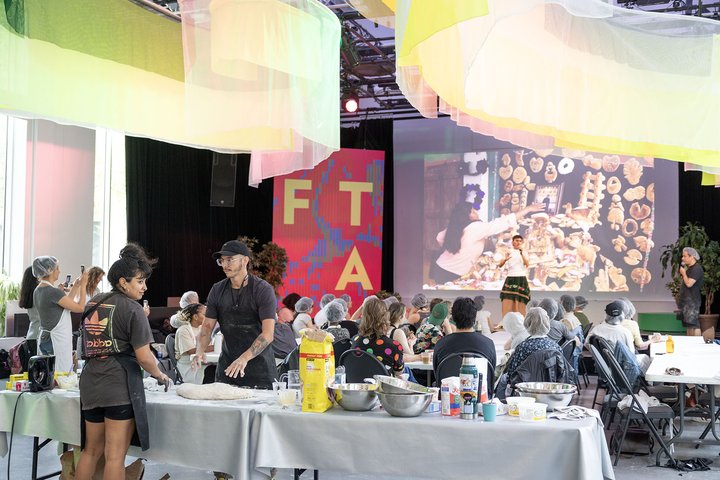
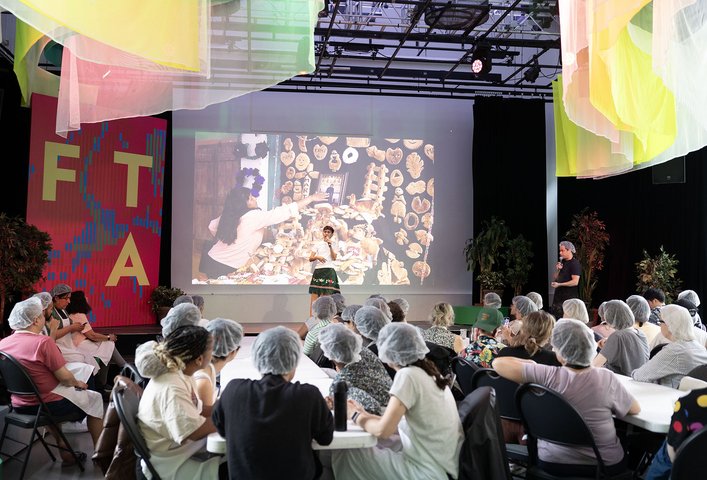
In this encounter, Tiziano Cruz, an artist from the Quechua and Aymara communities, invites us into the practice of making bread offerings, where art, memory, and Andean cosmology meet. He takes something rooted in his own childhood and in his community and opens it up as a shared experience, one through which we reflect on colonization and cultural syncretism, and on the reclaiming of Indigenous ways of understanding life, death, territory, and community.
 Register here
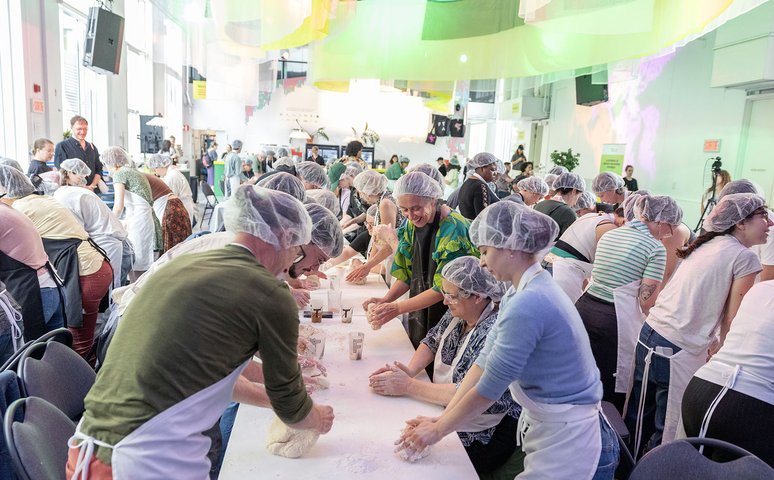
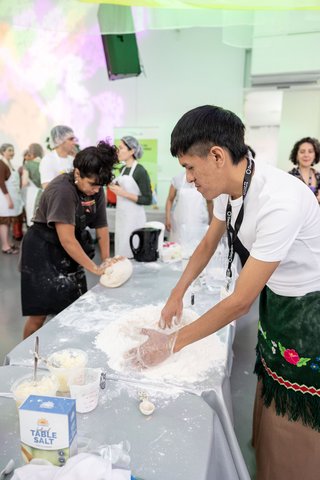
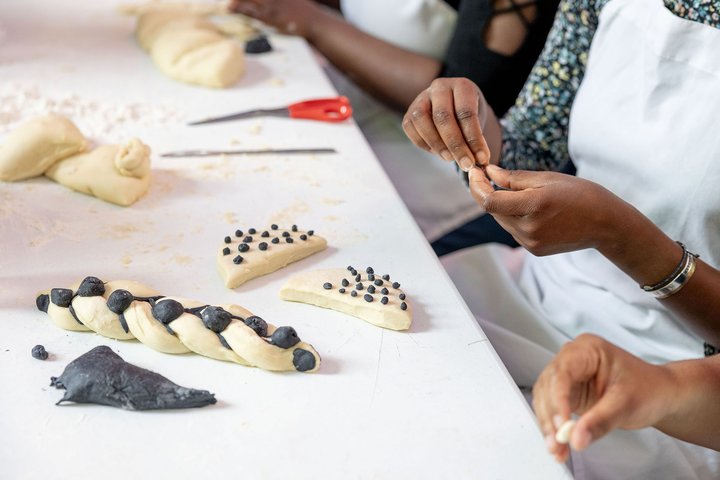
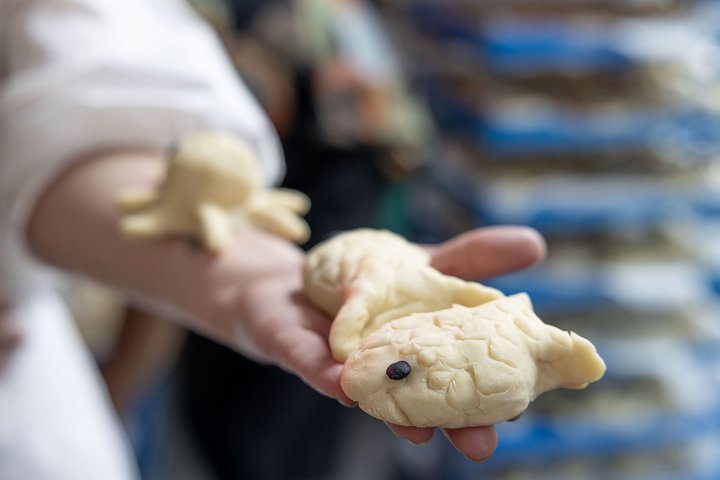
The workshop is being held in cooperation with the Plataforma Berlin Festival 2026. It unfolds in three stages. We begin by preparing the dough from a traditional recipe, then turn to the histories of ritual around life and death in Latin America, and close with an invitation to remember someone who has died and to shape a bread figure in their memory.
Drawing on Indigenous understandings of how the earthly world and the ancestral realm relate to one another, the workshop considers the place of the Malquis—the deceased—and of the mountains, or Apus, as spaces of rest and of connection with the ancestors, along with the objects and rituals that sustain community life. Colonization suppressed Indigenous rituals, and Indigenous traditions came to be interwoven with Catholic symbols and practices. Offering bread, a new way of staying in touch with the dead, is one example of that syncretism.
We will look at different forms of offering across Latin America, among them pan de muertos in what is now Mexico, tanta'wawas (bread babies) in what are now Peru and Bolivia, and tanta'escalera (ladder), tanta'cruz (cross), chakana (the Andean stepped cross), and tanta'paloma (dove) in what is now northern Chile and Argentina. These figures bridge the planes of existence: Hanan Pacha, the upper or heavenly world; Kay Pacha, the earthly world of the present; and Uku Pacha, the world below.
In this sense, bread becomes artistic material, food, memory, and offering all at once, and the practice lets us understand death as a relationship that continues among the living, the dead, the territory, and the community. The ritual is alive today, and during these celebrations in particular, people who have migrated return to their towns and their mountains to reunite symbolically with the loved ones they have lost.
The workshop takes place in Spanish with English translation. To participate, please register through the following form: Registration
Español:
En este encuentro, Tiziano Cruz, artista de las comunidades quechua y aimara, nos invita a la práctica de elaborar ofrendas de pan, donde se encuentran el arte, la memoria y la cosmología andina. Cruz convierte una práctica arraigada en su infancia y en su comunidad en una experiencia compartida, desde la cual reflexionamos sobre la colonización y el sincretismo cultural, y sobre la recuperación de las formas indígenas de entender la vida, la muerte, el territorio y la comunidad.
El taller se desarrolla en tres etapas. Empezamos preparando la masa según una receta tradicional, seguimos con un recorrido por la historia de los rituales en torno a la vida y la muerte en América Latina y terminamos con una invitación a recordar a alguien que ha fallecido y a modelar una figura de pan en su memoria.
A partir de las concepciones indígenas sobre la relación entre el mundo terrenal y el mundo de los antepasados, el taller explora el lugar que ocupan los Malquis —los difuntos— y las montañas, o Apus, como espacios de descanso y de conexión con los ancestros, junto con los objetos y rituales que sostienen la vida comunitaria. La colonización suprimió los rituales indígenas, y las tradiciones indígenas se entrelazaron con símbolos y prácticas católicas. La ofrenda de pan, nueva forma de mantener el vínculo con los difuntos, es un ejemplo de ese sincretismo.
Recorreremos diversas formas de ofrenda en América Latina, entre ellas el pan de muertos en lo que hoy es México, las tanta'wawas (de tanta, pan, y wawa, bebé) en lo que hoy son Perú y Bolivia, y la tanta'escalera, la tanta'cruz, la chakana (la cruz andina escalonada) y la tanta'paloma en lo que hoy es el norte de Chile y Argentina. Estas figuras tienden un puente entre los planos de la existencia: Hanan Pacha, el mundo superior o celestial; Kay Pacha, el mundo terrenal del presente; y Uku Pacha, el mundo de abajo.
En este sentido, el pan es a la vez material artístico, alimento, memoria y ofrenda, y la práctica nos permite entender la muerte como una relación que perdura entre los vivos, los muertos, el territorio y la comunidad. El ritual sigue vivo y, especialmente durante estas celebraciones, quienes han migrado regresan a sus pueblos y a sus montañas para reencontrarse simbólicamente con quienes ya no están.
El taller se realiza en español con traducción al inglés. Por favor, inscríbanse usando el siguiente formulario: Inscripción
El evento se lleva a cabo en colaboración con el Festival Plataforma Berlín 2026.