U nukuch che’ilo’ob chiicho’ob yéetel noolo’ob
Spore hosts
Save the Date
Into the Wasteland: A Conversation on Fascism and the Crisis of Capitalism
Panel Discussion
22. May 2026
18.45-21.00
18.45-21.00
Save the Date
For free
For adults
in English
This panel discussion is part of a hybrid lectures series “Fascization”:
This lecture series examines current trends that depart from democratic principles and the rule of law, as well as the dehumanization of individuals deemed dangerous. At a time when overlapping existential crises are exacerbating one another—crises that should be addressed through solidarity and cooperation—we are witnessing policies of division and destruction.
This panel asks how processes of fascization inward and imperial violence outward are bound together in the present conjuncture, where capitalist crisis is managed through racialization, militarization, and permanent war. Drawing on Marxist, anti‑colonial, and Black radical traditions, the discussion treats contemporary fascization in Western states not as an aberration but as a complex intensification of racial capitalist formations. It traces contemporary genocide and imperial warfare back into longer histories of colonial expansion, racial hierarchy, and capitalist accumulation.
The crisis appears not merely as ideological or institutional, but as structural: capitalism increasingly reproduces itself through forms of organized and eliminationist destruction. This raises urgent questions about the relation between state violence, imperial domination, and the management of “surplus populations” – central to the fascist ordering of both domestic order and global war.
The panelists are Bafta Sarbo (social scientist, author, and political educator), Jule Ulbricht (researcher), Alberto Toscano (social theorist, author, and professor), Daniel Loick (philosopher, social scientist, and professor) and Vanessa Thompson (social scientist and professor of Black Studies).
This panel discussion is part of a hybrid lectures series “Fascization”: This cross-semester lecture series (Winter 2025/26 and Summer 2026) will take place at various universities and spaces in Germany and Austria, is open to all interested parties, and will be streamed in a hybrid format to facilitate a broad, critical examination of the phenomenon of fascization. It is organized by the working group “What is Fascization” of the Alliance for Critical Scholarship in Solidarity (KriSol).
To join the conversation online, you find the zoom link here: https://krisol-wissenschaft.org/en/fascisation/.

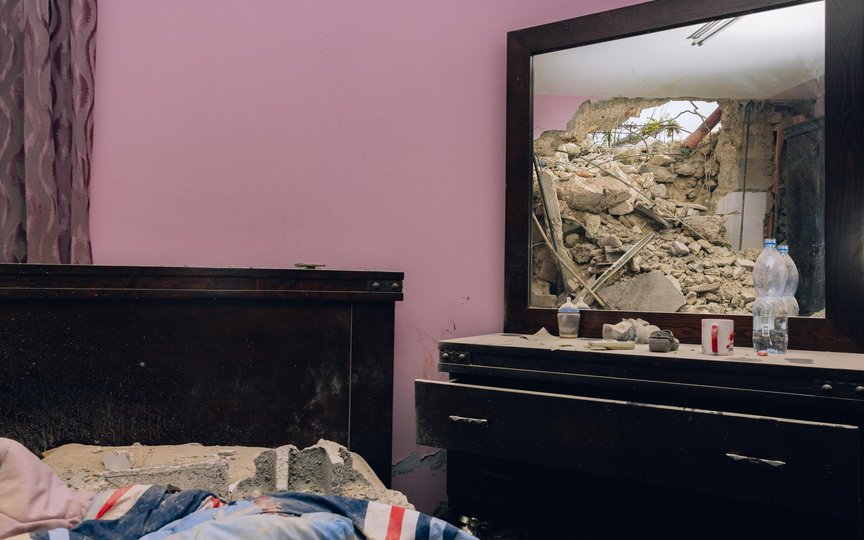 "Area: D" Series