
Gardens of Care
Spore hosts

Save the Date
ALFILM: 100 years of Youssef Chahine - Do you believe in Cinema after Defeat?
Panel Discussion
26. April 2026
17.00-18.30
17.00-18.30
Save the Date
For free
For adults
in English/Arabic
In 1967, the Arab world experienced a profound political and psychological rupture following the Six-Day War. The defeat, known in Arabic as al-Naksa (the setback), deeply affected artists and intellectuals across the region. For Egyptian filmmaker Youssef Chahine, this historical moment became a turning point that reshaped both his cinema and his political consciousness.
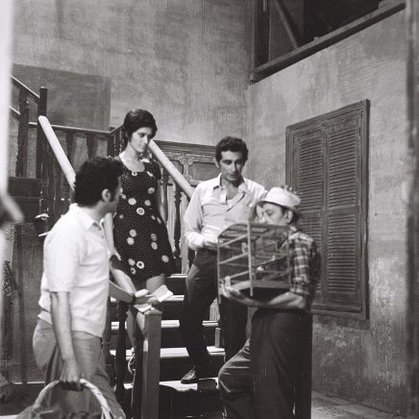
Chahine’s response to defeat culminated in his films after: The Choice (1971), The Sparrow (1972), The Return of the Prodigal Son (1976), which interrogate the causes and consequences of collective trauma. Rather than offering a simple political diagnosis, these films explore how defeat reverberates through intimate lives, personal identities, and artistic expression.
In Chahine’s cinema, political catastrophe becomes a catalyst for self-examination and reinvention. Chahine moved after that to two main cinematic lines – first retelling his own story in his autobiographical films (Alexanderia Trilogy and An Egyptian Story) and revisiting history in Adieu Bonaparte, The Sixth Day, The Immigrant and The Destiny.
Marking the centenary of Chahine’s birth, this panel reflects on the relationship between defeat and transformation in cinema, in artistic practice, and in personal memory. How does political defeat reshape creative voices? How do filmmakers process collective trauma through storytelling? And what can Chahine’s work teach us about confronting defeat today?
We will discuss this with Viola Shafik (Egyptian-German filmmaker, writer and theorist) and Essa Grayeb (Palestinian visual artist), both of whom have a personal connection to the cinematic legacy of Youssef Chahine.
The panel will be moderated by Hosam Fahmy (Film critic and psychiatrist).
This panel is open to festival attendees, those who love Chahine, those who want to engage with his cinema, those who want to learn more about him, and most importantly, all those who try to survive despite defeat.

ALFILM Festival
This edition of ALFILM is the biggest one yet, featuring 60+ films across 10 venues in Berlin. ALFILM presents in its two program sections a thoughtfully curated line-up reflecting a variety of artistic approaches and political perspectives in contemporary Arab cinema.
The ALFILM Selection showcases recent productions from across the Arab-speaking region and the Arab diaspora, offering insights into current cinematic styles and thematic concerns.
The ALFILM Spotlight, titled Sudan: New Projections – Retrospectives, Revolutions, and Restorations is conceived by a guest curator, Talal Afifi, producer and director of the Sudan Film Factory. The program highlights the creative force of Sudanese filmmakers despite war and the collapse of cultural infrastructure. Masterclasses, panel discussions, film talks, special screenings, an art exhibition entitled Sudan Retold and a party on April 24 in Festsaal Kreuzberg will once again complement the film program and invite audiences into dialogue with filmmakers, artists, and experts.
Funded by the Hauptstadtkulturfonds and the Berlin Senate Department for Culture and Social Cohesion. With the kind support of the Rosa Luxemburg Foundation, using funds from the Federal Ministry for Economic Cooperation and Development (BMZ), the Friedrich Ebert Foundation, the Council of Arab Ambassadors, and the Leibniz Center for Modern Oriental Studies (ZMO).