
surtelifacilitation
stories
The story of a handkerchief and reflection on memory, loss, and climate change
By Rose Wanjiku
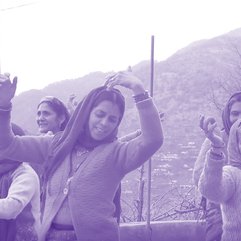
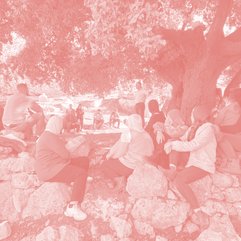
Recently, I led a workshop titled Roots and Routes: Storytelling for Climate and Migration Justice. We gathered to explore how our stories carry us through change and how the roots of memory and belonging connect with the routes of migration and adaptation. I reminded the participants that there were no requirements — they just needed to bring themselves, their memories, and their imagination.
To ground the session, I asked: 'What does climate change mean to you, in your life, your community and your body?' The responses revealed a powerful undercurrent of grief. As people spoke, there was sadness; stories of vanishing rivers, disappearing birds, fireflies we once chased at dusk, medicinal plants that can no longer be found, food we can no longer find, and an Earth that feels less alive. One participant recalled the anger of nature in her home country; the raging waters of the sea.
Moments of silence followed. It was as if each person was mourning not only the loss of nature, but also a part of themselves that had disappeared with it.
Climate grief, sometimes called eco-anxiety or solastalgia (the pain of losing one’s home environment), is increasingly recognised by psychologists as a natural human response to environmental destruction. Psychologists note that climate-related stress can lead to feelings of helplessness, sadness, and mourning. Yet, unlike personal bereavement, climate loss is continuous, an ongoing grief with no closure because the damage keeps unfolding.
Most societies offer little space to process this pain. We are told to recycle, adapt, or innovate, but rarely to grieve. The workshop created that rare moment of pause; a place where stories became vessels for mourning and, eventually, for healing.
Among the stories shared, one stood out. A participant recalled the handkerchief pinned to her school uniform; a small, everyday object of care. Back then, everyone carried one, whether they had a cold or not. It was a sign of cleanliness, responsibility, and dignity. The handkerchief was washable, reusable, and lasting. This story of the handkerchief resonated with most participants. Many smiled knowingly at the memory of their precious handkerchiefs.
Throughout our conversation, the handkerchief became a powerful reminder of what we have lost: not only the habit of preservation, but also the culture of care it represented. Once a symbol of dignity and self-respect, the handkerchief was part of every schoolchild’s identity, pinned neatly to a uniform, like a quiet lesson in responsibility. It was washable, reusable, lasting; an object that carried both memory and meaning. Its disappearance speaks to more than changing fashion; it reveals how we have drifted from values of endurance and stewardship towards disposability. By remembering it, we remember a time when care was woven into the smallest gestures and keeping and reusing things was both practical and moral.
As she told the story, the handkerchief became a mirror reflecting how our relationship with resources has changed over time. Our parents seemed to understand conservation instinctively. They valued endurance and repair over convenience. Today, the handkerchief has been replaced by disposable tissues, a shift accelerated by the COVID-19 pandemic, when reusing anything personal was discouraged for hygiene reasons. But the participant wondered aloud: was that entirely true, or just another symptom of a disposable culture?
When she continued to use a handkerchief, she was shamed. “Tissues are posher,” friends said. “You can just throw them away.” But what do we throw away, really? The trees that make the paper? The energy that powers the factories? The water used in bleaching and packaging? Every tissue, every “convenient” product, carries an ecological cost that rarely features in our conversations.
Her story of the handkerchief was simple yet deeply symbolic. It became a metaphor for climate grief, showing how loss often begins in the smallest details of daily life before it expands into global crises. In the workshop, this story raised an important question: how can a return to small, sustainable habits become part of the broader response to climate change?
For her, the answer was to “go back to the start,” rethinking, reusing, and raising awareness. This idea reflects the principles behind circular economies, which encourage repairing and repurposing rather than discarding. However, beyond policy debates, her reflection highlights a more practical truth: lasting climate solutions must be rooted in communities, not imposed from boardrooms.
About the author: Rose Wanjiku